
How to Organise a Mini Cricket Tournament at a Farmhouse
· 5 min read· by Farmhouses Hyderabad Team
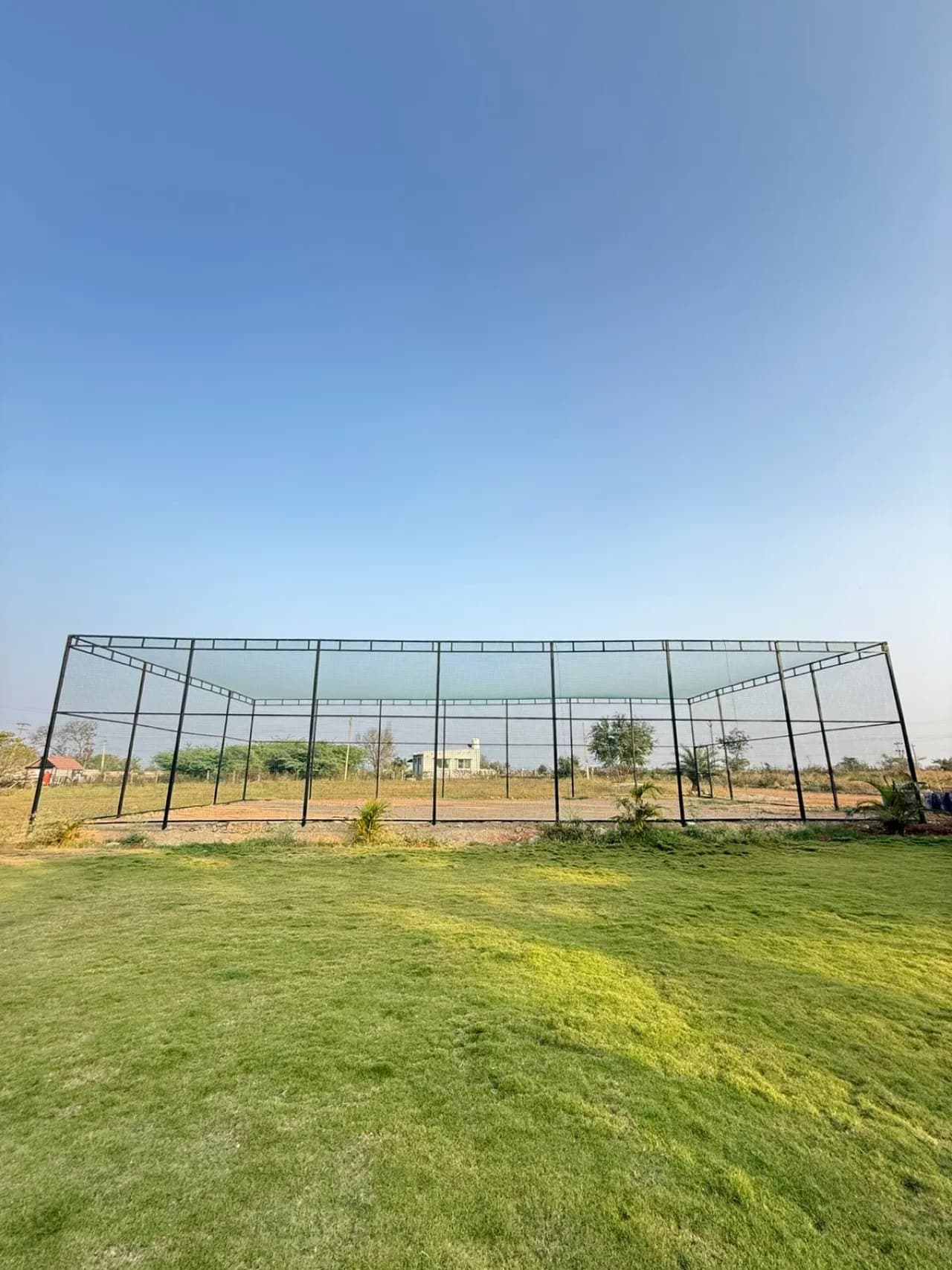
An organiser's step-by-step handbook for a mini box cricket tournament at a farmhouse: teams, formats, rules, timetable and prizes.
To run a mini cricket tournament at a farmhouse, you need four things decided before the day: how many teams, what format, a one-page rulebook, and a timetable that avoids the midday heat. Get those right and the rest of the day organises itself. Skip them and you will spend the afternoon arguing about whether a ball off the net is out.
This is an organiser's handbook, written for the one person in your group who has volunteered (or been volunteered) to run it. Follow the steps in order.
Step 1: Count heads and make the teams
Start with a realistic headcount of people who actually want to play, not everyone coming to the farmhouse. Then decide team size. For a typical farmhouse box, five or six players a side is the sweet spot; for an open lawn, you can go a little bigger.
Ways to make teams fairly:
- Captains' draft: pick two to four captains, who choose players in turn. Fun, but the last pick can feel awkward.
- Seeded draw: split people into "regulars" and "casuals", then draw one from each pot in turn. Usually the most balanced.
- Natural teams: departments, families, college batches or hostel wings. Great for rivalry, less balanced.
Give every team a name. "Moinabad Mavericks" gets more cheering than "Team B".

Step 2: Choose a tournament format
The number of teams decides the format. Keep total playing time to a few hours spread across the day.
| Teams | Suggested format | Matches |
|---|---|---|
| 2 | Best of three | 2–3 |
| 3 | Round robin, top two in the final | 4 |
| 4 | Round robin, top two in the final | 7 |
| 4 (short on time) | Two semi-finals and a final | 3 |
| 6 | Two groups of three, group winners in the final | 7 |
| 8 | Two groups of four, then semis and final | 15 |
For eight or more teams, a single box gets crowded. Either shorten each match or pick a farmhouse with more open space. Our page of farmhouses for large groups is a good starting point.
Step 3: Write a one-page rulebook
Every gully and box cricket group has its own rules. Write yours down and read them out before the first match. A sample set to adapt:
- Each innings is 4 or 5 overs. The final can be 6.
- Tennis ball only. Overarm bowling allowed, but no bouncers above shoulder height.
- Every player must bowl at least one over; no one bowls more than two.
- Ball hitting the top net directly is out, or counts as a dot ball. Pick one.
- Ball hitting a side net after bouncing gives a fixed number of runs, agreed in advance.
- One-tip-one-hand catches: decide yes or no before the toss.
- Wides and no-balls are one run plus a re-bowl, except in the last over when they are just one run.
- Ties are settled by a one-over super over.
- The umpire's call is final. The umpire is someone from a team not playing.
Keep the rules short. The goal is fewer arguments, not a legal document.
Step 4: Build a timetable around the weather
Telangana afternoons from March to June are punishing. Even in the pleasant months, a tournament in full sun drains everyone. A sample schedule for a day booking:
- 8:30–10:30 am: group stage, first round
- 10:30 am–1:00 pm: pool and break
- 1:00–4:00 pm: lunch and rest, no cricket
- 4:00–5:30 pm: remaining group matches and semi-finals
- 5:30–6:15 pm: the final, ideally under lights if the box has them
- 6:30 pm: presentation ceremony
Overnight stays give you more flexibility: group matches on day one evening, the final the next morning. Our 24-hour farmhouse itinerary shows how to fit it into a night stay.
Step 5: Assign the off-field roles
A good tournament has a small crew behind it:
- Scorer: uses a free scoring app or a notebook, and announces the target.
- Umpires: rotate from teams not playing.
- Commentator: optional, but the person with the loudest voice and best one-liners will make the day.
- Hydration in-charge: water, buttermilk and ORS at the side of the box.
- Photographer: someone who captures the winning moment and the team photos.
Step 6: Prizes and the ceremony
Prizes do not need to cost much; they need to be memorable. Ideas:
- A cheap trophy or a decorated steel tumbler as the winners' cup
- Player of the tournament, best catch, and "most dramatic dismissal"
- A wooden spoon for the last-placed team, who also serve dinner
- Printed certificates with funny titles for everyone
For office teams, this is also a natural moment for a short thank-you from a team lead. We have more ideas for workplace groups in team-building games that work at a farmhouse offsite.
Checklist for the organiser
- Confirm with the host that the box or lawn is available and whether bats, stumps and lights are provided
- Bring spare tennis balls, a spare bat, tape and a whistle
- Print or share the fixture list and rules in the group chat the night before
- Carry a small first-aid kit with ice packs and spray for knocks and sprains
- Keep kids' matches separate with a softer ball
House rules on noise, timings and use of facilities differ between farmhouses, so check them on the listing or with the host on WhatsApp.
Find the right ground
The venue makes or breaks a tournament: a well-netted, lit box and enough shade for waiting teams. Start with farmhouses with box cricket in Hyderabad, and read why groups love box cricket farmhouses for what to look for. If you have special requirements for a big group, you can get in touch with us. Then check live availability, lock the date and start drafting team names.
- #cricket box
- #farmhouse hyderabad
- #friends getaway
- #hyderabad events
- #farmhouse booking
Frequently asked questions
How many overs should a farmhouse cricket match be?
Four to five overs per side works well for box cricket with several teams, keeping each match short so everyone plays. Make the final slightly longer for drama.
How many teams can play a tournament in one day at a farmhouse?
Four to six teams fit comfortably into a day with breaks for heat and lunch. With eight or more, shorten matches or use a farmhouse with extra open space.
What ball should we use for farmhouse box cricket?
A tennis ball is the usual choice; many hosts prefer it to protect nets, lights and windows. Use a softer ball for kids' matches.
Can we play the final under lights?
Only if the box has working lights and the host allows play after sunset. Confirm both before you plan an evening final.
Farmhouses to book near Hyderabad

4 BHK · 7 Baths · 15 Guests · Up to 24 with extra beds

3 BHK · 4 Baths · 10 Guests · Up to 20 with extra beds

4 BHK · 5 Baths · 15 Guests · Up to 20 with extra beds
More from the blog
All posts Guides
Planning Your Next Farmhouse Trip: A Year-Round Calendar
A month-by-month calendar for farmhouse trips near Hyderabad: what each season is good for, which dates fill early, and when to book.
Read- Guides
What First-Time Guests Ask Most About Hyderabad Farmhouses
Never booked a farmhouse before? Straight answers to the questions first-time guests in Hyderabad ask most, from privacy and food to pools and payments.
Read - Guides
Torn Between Two Farmhouses? A Simple Way to Decide
Two farmhouses, both look great, and the group chat can't agree. A simple scoring method to break the tie and book with confidence.
Read

Not sure which farmhouse to pick?
Tell us your date, group size and budget — we'll suggest the best options.